
August 5, 2026
Burnout Isn't Weakness: It's a System Problem
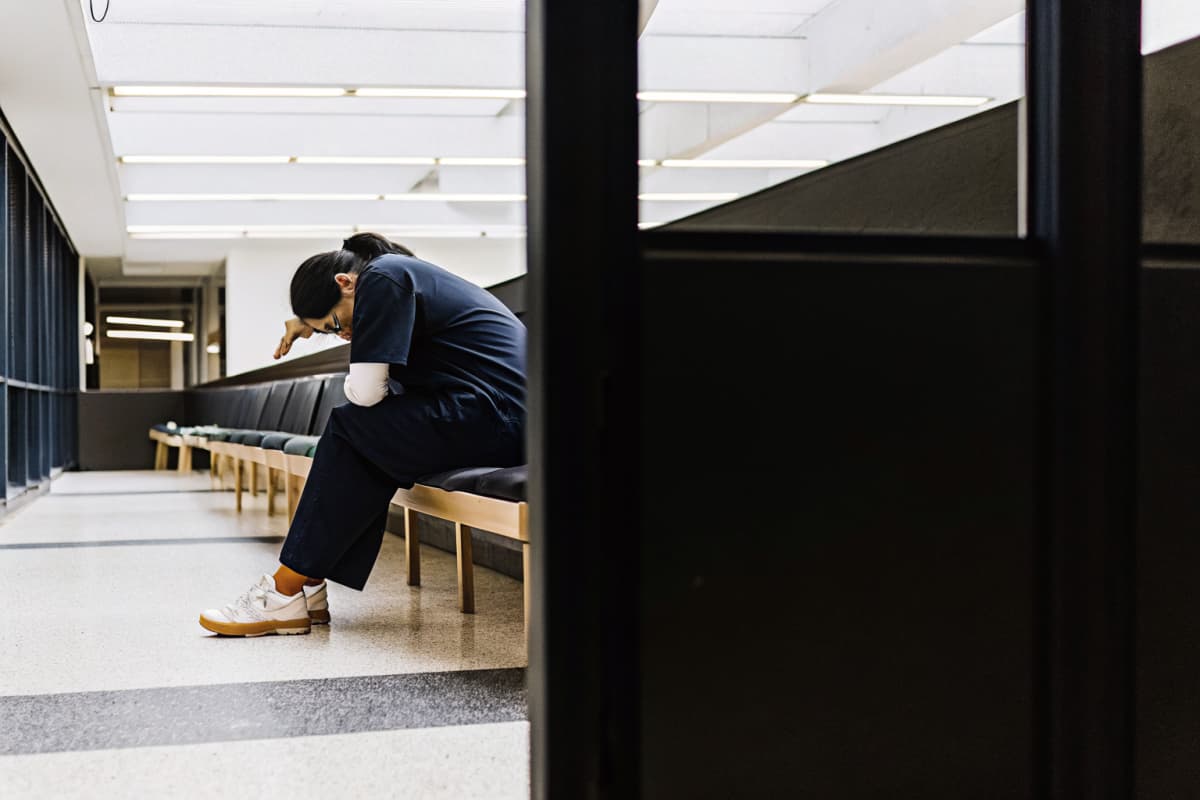
"My second NOC shift in a row with 26 residents to myself." That's not a complaint pulled from a think piece, that's a real post from a CNA describing a real Tuesday. Read it twice and tell yourself that person just needs better coping skills, needs to meditate more, needs a gratitude journal. You can't, because the math doesn't work. One person cannot safely carry 26 residents through a night shift no matter how resilient they are. When the job asks for something that isn't possible and you burn out trying anyway, that isn't a personal failure. That's the system working exactly the way it was staffed to.
Burnout gets sold back to healthcare workers as an individual problem with an individual fix: sleep more, hydrate, set boundaries, try yoga. Every one of those things helps at the margins. None of them touch the actual cause, which is that hospitals run on census targets and margin reviews now, and the gap between what the budget allows and what patient care actually requires gets absorbed by whoever is closest to the bedside. That's you, on legs that have already done ten hours, telling yourself you should be handling this better.
The staffing math nobody puts on a poster
A unit that used to run five patients per nurse quietly becomes six because the schedule said it could technically be covered. A CNA who used to have 15 residents ends up with 26 because two people called out and admin decided the shift would "figure it out." None of that shows up in a hospital's mission statement. It shows up in your knees, your lower back, and the four days off you spend recovering instead of living. Burnout isn't what happens when someone cares too little. It's what happens when the ratio finally outpaces what one human body can carry, three-on-four-off, week after week.
This is why the same nurse who ran a chaotic ICU shift without blinking two years ago is the one crying in her car in the parking garage now. She didn't get weaker. The unit got short a nurse, short a tech, short the support that used to make the job survivable, and nobody adjusted the number of patients to match. Burnout tracks staffing ratios a lot more closely than it tracks anyone's individual grit.
Why the "just build resilience" advice misses
There's a real instinct in nursing to minimize your own exhaustion, to say your back is dead by the end of a shift and immediately follow it with a joke, because saying it plainly feels like complaining about a job that's supposed to be about helping people. That instinct is exactly how a systemic problem gets mistaken for a personal one. If you're the only one talking about how hard the floor is, it starts to feel like your problem to fix quietly instead of your unit's problem to fix out loud.
Resilience training has a place, but it was never built to solve a staffing gap. You can meditate every morning and still walk into a shift that requires two extra sets of hands nobody scheduled. The fix that actually moves the needle isn't more coping tools stacked on top of an impossible ratio, it's naming the ratio as the problem in the room where staffing decisions get made.
What actually helps, day to day
Bring specifics to huddle, not vibes. "Six patients with two of them post-op" moves a conversation further than "I'm tired." Nurses who name the exact task, the exact ratio, the exact time window change staffing decisions more often than nurses who just try harder and burn out quietly. Numbers move when someone with bedside credibility explains why the current ratio isn't working, in the language admin actually tracks.
Lean on your crew before you're underwater, not after. A charge nurse who knows you're drowning can shift a task or buy you five minutes with the one patient who actually needs it. A tech who grabs an ADL while you chart a med pass is worth more to your night than any wellness webinar. Nobody survives a five-patient med/surg load solo, and pretending you should is how the burnout gets worse instead of better. And protect your four days off like they're required recovery time, because they are. Whatever gets your body and your head back online before the next stretch, whether that's sleep, daylight, or just getting dressed as a person instead of a uniform, that's part of the job too.
The one thing that's still yours
The staffing ratio isn't something you fix alone, and it's not something a shirt or a pair of sneakers can touch. What is yours is how you show up for yourself on the days that belong to you and nobody else. Off-shift, get the whole fit handled instead of standing in front of a closet feeling behind on something you never had time to learn. That's not a fix for the system. It's one part of this job that stays entirely, unapologetically yours, and it's worth protecting exactly because so little else is.