
August 7, 2026
Compression Socks for Shift Workers: Real Benefits Explained
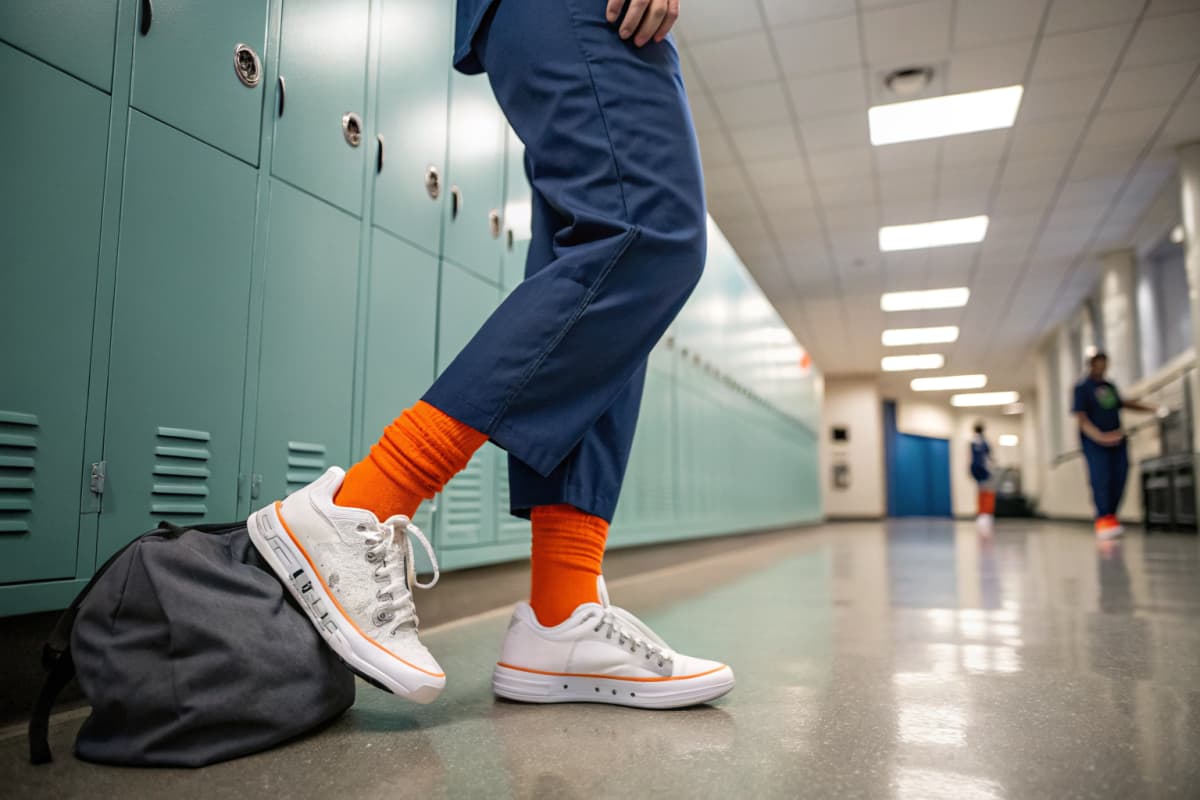
Somewhere around hour eight, your socks leave a mark that's still there at hour twelve. If that sounds familiar, you already know the feeling compression socks are built to fight. A lot of nurses and CNAs write them off as something their grandmother wears on a flight, or a novelty add-on some gift shop tosses in with a coffee mug. That reputation is wrong, and it's costing people twelve hours of avoidable ache. Compression socks are one of the few pieces of gear on this job that are pure function, no gimmick, backed by actual venous mechanics instead of marketing. Here's what they're really doing while you're on the floor, and why the good ones deserve a spot in your rotation next to your sneakers, not a drawer you forget about.
What Compression Socks Are Actually Doing to Your Legs
Standing and walking for twelve hours straight puts your leg veins to work against gravity the entire time, pushing blood back up toward your heart with nothing but muscle contraction to help. On a normal day that system keeps up fine. On a 3x12, especially day two or three of a stretch, it starts falling behind, and blood pools in your lower legs. That pooling is what shows up as swelling, heaviness, and that dull ache that sets in by the afternoon and doesn't fully clear overnight. Graduated compression socks apply the most pressure at the ankle and gradually less as they go up the calf, which mechanically pushes blood upward instead of letting it sit. It's not a feeling, it's plumbing. The sock is doing a job your veins can't finish alone after hour eight of standing.
Why It Matters More on Day Two and Three
One twelve-hour shift is manageable for most people's circulation. Three in a row is where the deficit compounds, because your legs never get a full day to reset between shifts. Nurses who run 3x12s consistently report the same pattern: day one feels fine, day two the ankles start feeling tight by the afternoon, and day three the socks leave a mark that takes a while to fade. Wearing compression through the whole stretch, not just the shift that feels worst, is what actually keeps that pattern from building. It's the same logic as any recovery gear. It works best when it's part of the routine, not a fix you reach for after the damage is already done.
They're Not a Novelty, and They're Not Just for Nurses Over 50
The stereotype needs to die. Compression socks aren't a sign you're getting older or that your job has broken you. They're the same tool physical therapists recommend for anyone standing for long stretches, from warehouse workers to flight crews to bedside RNs and CNAs on a five-patient assignment. The nurses skipping them aren't avoiding them because the science is bad. They're avoiding them because the ones they've tried look clinical, feel like a tourniquet, or come in exactly one shade of beige. Good compression doesn't have to look like medical equipment. It comes in real colors now, which matters more than people expect when it's the one visible piece of gear the hospital dress code can't touch.
Make Them Part of the Fit, Not a Chore You Skip
Here's the part most advice about compression socks leaves out completely. Shoes and socks are the one place your personality survives a shift, no political statements, no tape on the badge, but nobody's regulating what's on your feet. That means the socks doing real work for your circulation can also be the socks that finish out your rotation, matched to the sneaker you're already wearing instead of some clinical afterthought you're embarrassed to have visible under cuffed scrubs. If you've already got a grail pair you love and nothing in your closet, including your socks, goes with it, that's an easy fix. Send us a picture of your sneakers and we'll match a shirt, hoodie, or socks to the exact colorway, custom, guaranteed. The full fit, from the ankle down, doing actual work for twelve hours instead of just sitting in the drawer.