
August 17, 2026
What's Really in a Nurse's Bag? Essentials for Every 12-Hour Shift
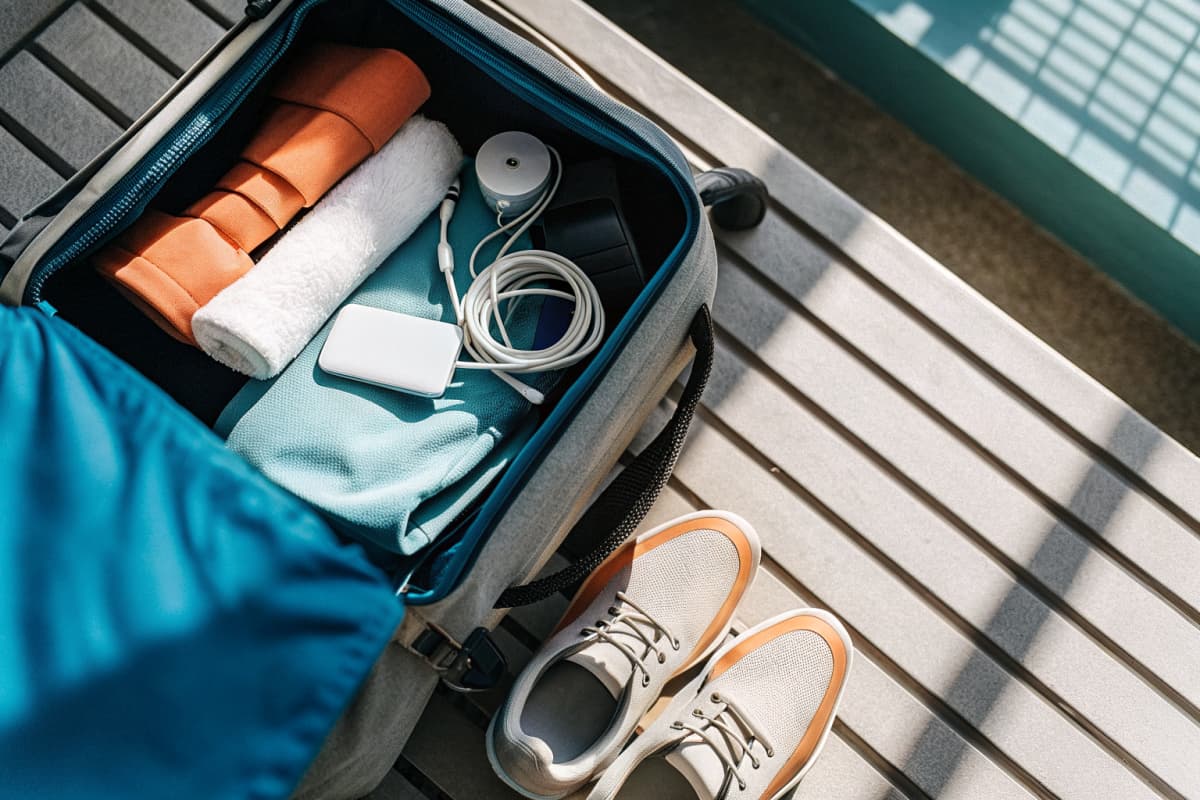
Ask a nurse what's in her bag and you get a fast answer, because she's had to think about it every single shift for years. Compression socks. A phone charger that actually reaches the outlet by the med cart. Snacks that survive getting crushed at the bottom for six hours. A badge reel in a color that isn't hospital-issued beige. None of it is random. Every item earned its spot after a shift where its absence cost her something, an ankle that swelled by hour eight, a phone that died before the drive home, a stomach growling through a code nobody could pause for. A 12-hour shift bag isn't a purse. It's a kit, packed the same way you'd pack for anything you already know is going to demand everything you've got.
The Stuff That Keeps Your Body Working
Start with the gear that's pure function, no gimmick. Compression socks make the list for almost everyone who's made it past their first year, because standing and walking for twelve hours straight puts your leg veins to work against gravity the entire shift, and by hour eight a lot of nurses feel exactly where that pressure lands. A backup pair of socks rides along too, because feet sweat through a full shift and a dry pair for the drive home is worth more than it sounds. And the sneakers themselves, whatever's actually on your feet, do more heavy lifting than anything else in the bag. They're not packed, they're worn, but they set the tone for how the other eleven hours feel.
Snacks, Caffeine, and Whatever Gets You to Lunch
Nobody's bag survives a 12 without food that doesn't need a fork. Protein bars, a bag of almonds, string cheese, whatever holds up in a locker without refrigeration and can get eaten standing up between rooms. Coffee gets you out the door, but the second thing in the bag, usually a travel mug or an electrolyte packet, is what gets you through the back half of the shift when the first cup wore off two hours ago. This isn't about eating clean. It's about eating at all on a day where your one real break might get eaten by a call light that shouldn't have been yours to answer.
The Small Personal Touches That Make It Yours
Past the function, the bag gets personal fast. Hand lotion, because hospital-grade sanitizer wrecks your skin by day two of a stretch. Lip balm for the same reason. A hair tie stash bigger than you'd ever admit you need. A photo of your kid, your dog, or your grail sneaker taped inside your badge reel where only you'll notice it. A pen that actually writes, kept separate from the ones that disappear into other people's pockets by 10am. None of this shows up on any hospital-issued packing list, and that's exactly the point. It's the stuff that reminds you there's a person under the scrubs, not just a unit assignment.
Specialty Pride Rides Along Too
Peds nurses carry different stickers than ICU nurses. NICU staff have a whole different badge reel game than the ER crew down the hall. School nurses pack things a bedside RN never would. None of that's an accident either, it's the same instinct that makes someone proud to say they're a peds nurse before they say they work at a specific hospital. The unit becomes an identity, and the bag quietly reflects it, one pin or sticker or lanyard color at a time, long before anyone asks what floor you're on.
The One Thing That's Not In the Bag, It's On Your Feet
Here's the part that gets overlooked. Hospitals regulate almost everything above the ankle, no political statements, no tape on the badge, no armbands. Shoes and socks are the one thing the dress code can't touch, which is exactly why so many nurses and CNAs are serious about their sneaker rotation in the first place. It's not vanity. It's the last place your actual personality gets to show up on a 12, and it's the one part of the fit that walks straight out of the building with you at the end of the shift, whether the rest of the bag stays in the locker or not.