
August 5, 2026
Understanding the Staffing Crisis: Why Every Shift Feels Short
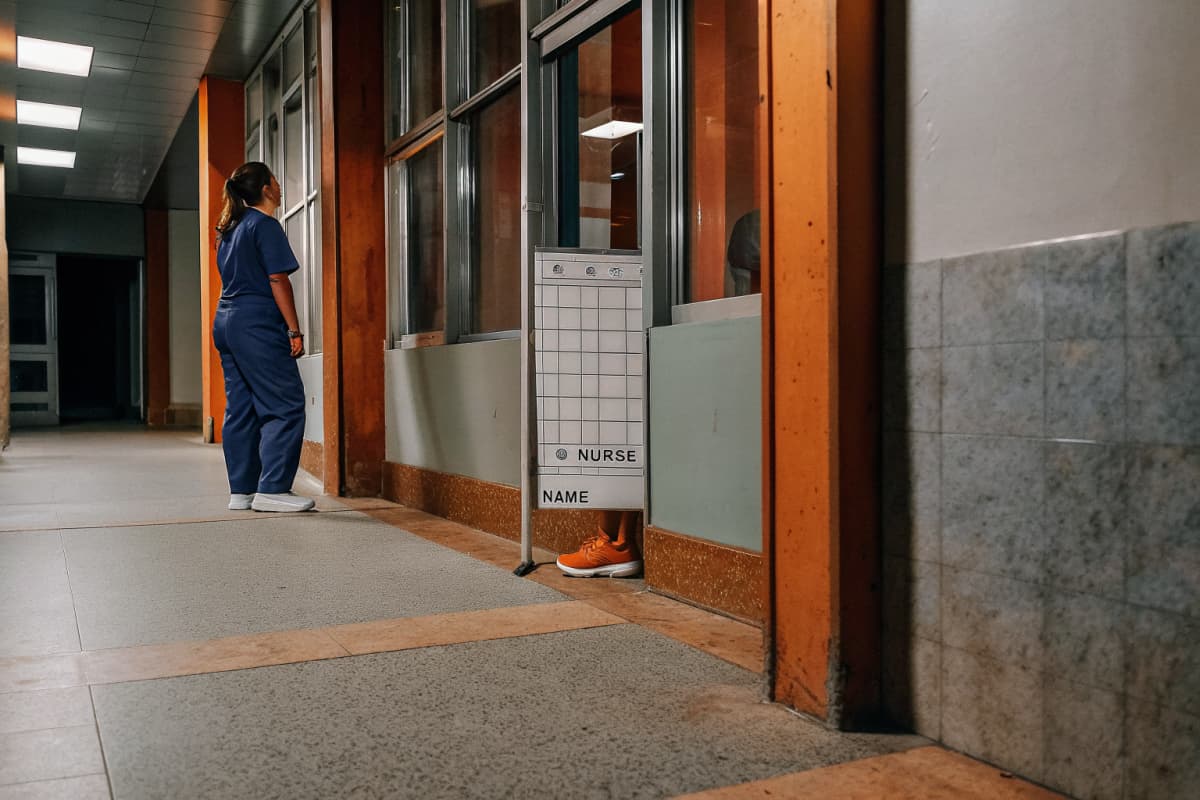
Type "why do nurses work 12 hour shifts instead of 8" into Google and you get scheduling theory: fewer handoffs, more consecutive days off, better continuity of care. Work an actual floor right now and you get a different answer. The 12 isn't the problem. What's inside it is. Two call-outs, one open req that's been open since spring, and suddenly your five-patient assignment is six, your charge nurse is also carrying patients, and the same twelve hours has to absorb work that used to be split three ways. That's the staffing crisis. Not a longer shift. A shorter one, stretched over the same clock.
"Short-staffed" gets used so often it stops sounding like a crisis and starts sounding like a Tuesday. But the math underneath it hasn't changed just because everyone got used to saying it. A unit built for five patients per nurse doesn't quietly become safe at six because the schedule said it could technically be covered. It just means the same twelve hours has less of you to go around, and everyone on the floor feels the difference by hour eight.
Why "short" is the right word for it
Every open position on a unit gets absorbed by the people already clocked in. A CNA who used to have fifteen residents ends up covering more because two people called out and the NOC shift got told to "figure it out." None of that shows up on a staffing report that just tracks whether the shift was technically filled. It shows up in your rounds taking longer, your charting getting pushed to the last hour, and your break getting eaten by a call light that shouldn't have been yours to answer.
The shortage doesn't announce itself with an empty unit. It shows up as a full one running on fewer hands. Bedside RNs, CNAs, and techs are all picking up the same slack in different ways, and by the third shift in a row, the gap between what the assignment board says and what one person can actually do safely starts to close in on you.
What a short-staffed 12 does to your body
Ask around and you'll hear it in almost the same words every time. "My lower back is dead by the end of one shift, three in a row is literally torture." That's not an exaggeration people reach for, it's a description of what happens when the same twelve hours on your feet now carries more turns, more transfers, more trips down the hall because there's nobody else to send. Try walking back and forth for twelve-plus hours when your knees are already worn down and your arches gave out years ago, and you'll understand why sneakers stop being a small decision on this job.
The staffing crisis doesn't just add tasks to your shift, it removes the recovery built into a normal one. Fewer techs on nights means more of the physical load lands on you directly. Fewer hands during a code means everyone's adrenaline runs longer than it should. Your body pays the difference between what the unit needed and what it had, shift after shift, whether the schedule technically balanced or not.
Picking up extra doesn't come free
When a unit is chronically short, the fix that actually keeps the floor running is usually you, or someone like you, picking up an extra shift. That's real money, and plenty of nurses will tell you straight up that it's earmarked before it even lands. But three-on-four-off only works as a recovery cycle if the four off actually happen. Cover a fourth shift because the board is empty again, and the days you were counting on to reset your body and your head just got shorter too.
This is the part that doesn't show up in any staffing metric: the shortage doesn't stay contained to the shift it happens on. It borrows against your next one. Fewer days off between stretches, less sleep reset before the next 3x12s, and a body that never quite gets back to zero before it's asked to go again.
Staying Shift Ready through a shift you can't control
You can't staff the unit yourself, and no shirt or pair of sneakers is going to fix a schedule that's two nurses short. What you can control is what's true the second you walk out of that building. Scrubs make the getting-dressed decision for you on shift. Off the clock, a fit that's already handled, matched down to the sneakers you actually chose, does the same thing on the four days that are supposed to be yours. It's a small thing to control on a job where most of the big things aren't up to you right now, and that's exactly why it's worth protecting.